Search
SCHN MHID Hub

Click here to find out about the MHID Hub including forms.

Click here to find out about upcoming hub webinars or to access the recordings.

Click here to join the hub e-list.


Latest Journal

Click here for a copy of our latest Journal Edition. Volume 16, Issue 1, 2026.

School-Link E-list

Join our free e-list here to receive resources, primarily the CHW School-Link Journal, and from time to time other relevant material concerning the mental health of children and adolescents with an intellectual or developmental disability.

CHW School-Link Brochure

Download our latest CHW School-Link service brochure here: 

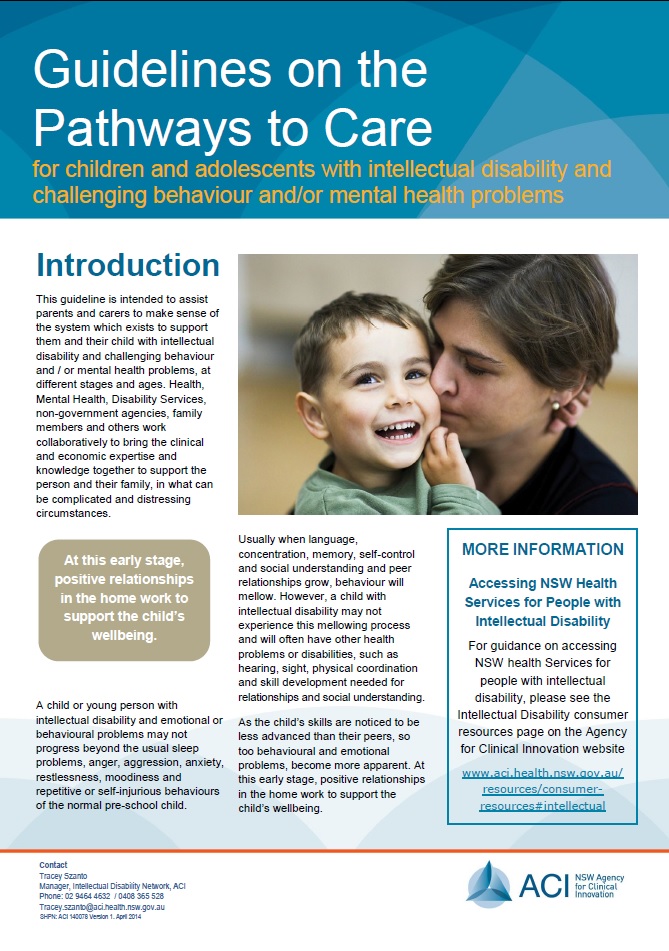
Guidelines on Pathways to Care

A guide for parents and carers: Guidelines on Pathways to Care for children and adolescents with intellectual disability and challenging behaviour and/or mental health problems.  

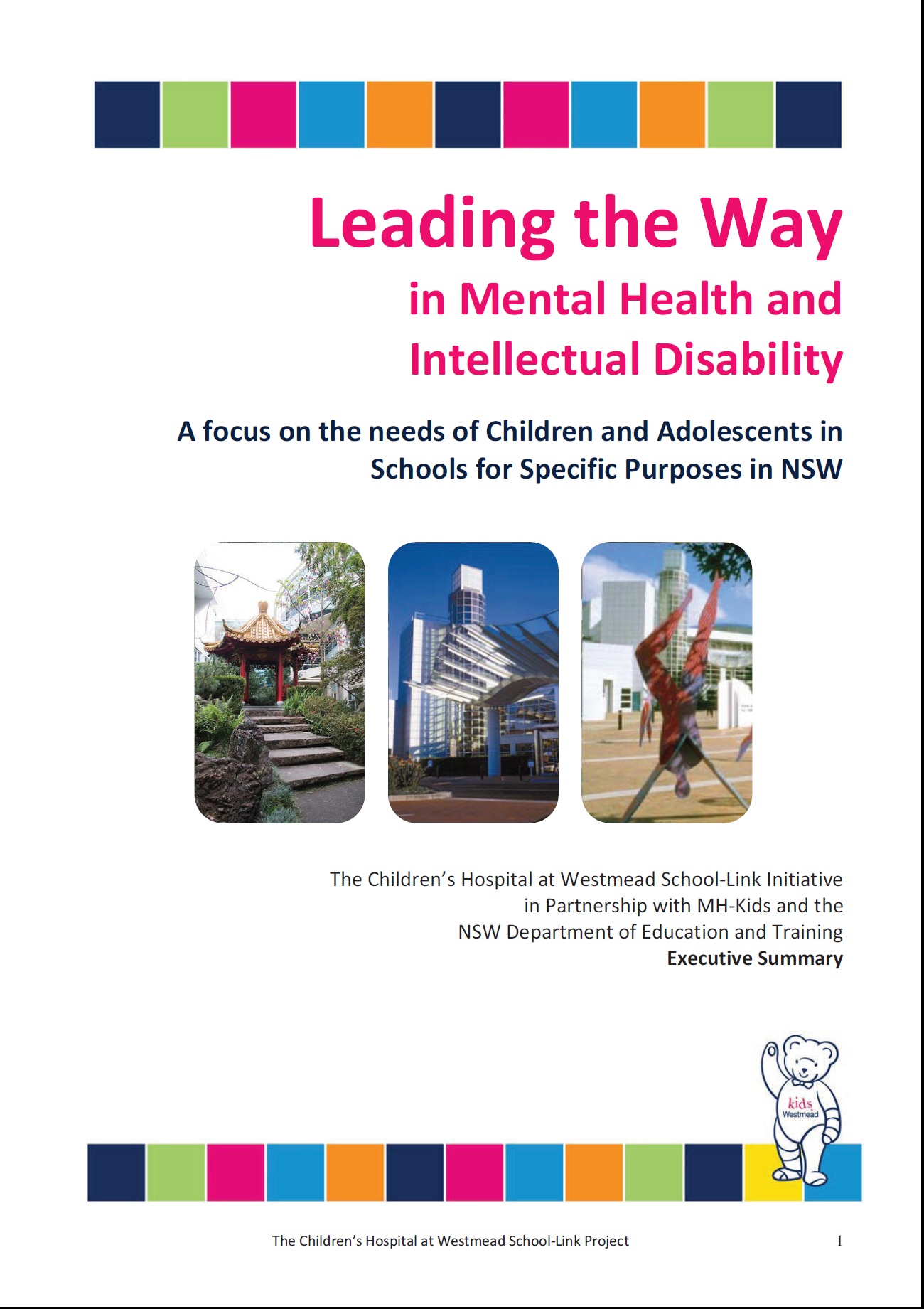
Excutive Summary

View the executive summary of the "Leading the Way in Mental Health and Intellectual Disability" needs analysis report here.


Behaviour Support in Schools

View the 2017 Obudsman Inquiry into behaviour management in schools. This report focuses on issues concerning students with complex needs and challenging behaviour. The report discusses the difficult challenges that schools face, but also draws attention to reasonable steps that can and should be taken to meet the learning and support needs of students, within a framework of best practice and evidence-based behaviour support.


Wednesday
Sep162015

ASPECT Newsletter Special Focus on Mental Health & Wellbeing

This month ASPECT shift the focus to mental health and wellbeing, taking a look at the importance of strong support networks, as well as the emotional challenges associated with social isolation. 

The newsletter looks at how understanding the correlation between autism spectrum disorders and mental health challenges can lead to significant improvements in wellbeing and positive long term outcomes for children and adults on the spectrum.

Read articles by Dr David Dossetor, Dr Julian Trollor and more.

Link available here 

Wednesday
Jul152015

Traffic Lights: the App

The Traffic Lights® App helps adults to identify, understand and respond to children’s sexual behaviour.

The App is based on the Traffic Lights® framework used by child protection authorities around the world. It supports the development of healthy sexuality and protects young people from harm and abuse.

Traffic Light colours are used to describe whether a specific behaviour is normal or not. It follows a logical structure:

- Enter the child’s age, sex and type of behaviour
- Identify whether the behaviour is green, orange or red by clicking the traffic light colours
- Swipe to see the possible reasons for this behaviour and how you might respond

Most sexual behaviours of children and young people are normal and healthy. However, please note that laws vary from place to place. While green light behaviours are normal and healthy, they may not be legal in every jurisdiction.

The app is currently available for $2.49. It has been developed by Family Planning Queensland who have some other great disability specific teaching resources which you can access here: http://www.fpqteachers.com.au/learning-resources/special-education/ 

Monday
Mar232015

Journal of Mental Health for Children and Adolescents with Intellectual and Developmental Disabilities for 2015

The first journal for 2015, Volume 6 issue 1 is now ready for your reading pleasure. Highlights include:

  • NDIS article by David Dossetor on page 4;
  • Autism Spectrum Disorders: Implications from the changes in DSM-V by Louisa Carroll on page 12;
  • The Medicine Cabinet: FAQs for Allergies and Anaphylaxis by Judy Longworth on page 16;
  • The Community Room: Connecting schools, support agencies and families and transforming lives by Michelle Montgomery on page 18;
  • Developmental Disabilities, Challenging Behaviour and Mental Health: Research to Practice and Policy– Conference Review by Rowan Keighran on page 20;
  • Book Excerpt: Ten things every child with Autism wishes you knew by Ellen Notbohm on page 23;
  • Equal before the Law: Towards Disability Justice Strategies by Terry Sarten on page 26;
  • The Client Monitoring and Review System (CMRS) by Rachel Rowles and Lesley Whatson on page 28;
  • Interview with Professor Julian Trollor on page 32.
Monday
Feb092015

New Phone App for Parents 

Download a free app on children with autism spectrum disorder (ASD) and disability to get funding and services help, parent stories and reliable, easy-to-understand information. Proudly produced by Raising Children Network, the app is available for iOS and Android.

You can use the Children with Autism & Disability app before and after a child is diagnosed with autism spectrum disorder (ASD) or disability.

With this free app, you can:
-use a pathfinder to navigate each stage of funding, services and support before and after diagnosis
-connect to ASD or disability services in your area with a mapping tool and key contacts directory
-navigate the Australian services system with step-by-step expert guidance
-learn from other parents’ experiences through parent videos
-get more information about disability and ASD from up-to-date, evidence-based articles.

Search “Children with autism and disability- A parent guide. “ or “Raising children network”.

Check out the Raising Children Network's Disability page here.

Monday
Jan192015

Is your child about to start school for the first time?

Starting school involves a big change for your child and family. It can be a time of great excitement, but also a time of potential challenge and stress.

Families play an important role in supporting children to manage the transition to primary school. The Kidsmatter website provides free resources that will give you practical ideas and strategies to help your child make a successful start to school. You will be able to watch a series of KidsMatter videos, as well as access information sheets and other practical resources.

Go to the Kidsmatter starting school webpage here.

Go to the NSW Department of Education and Communities Tranistion to School webpage here.

A recommended activity is to create a social story with your child about starting school. Details on how to create a social story can be found here.